
New Emoji: Distorted Face
If you want to convey fact, it can only ever be done through a form of distortion

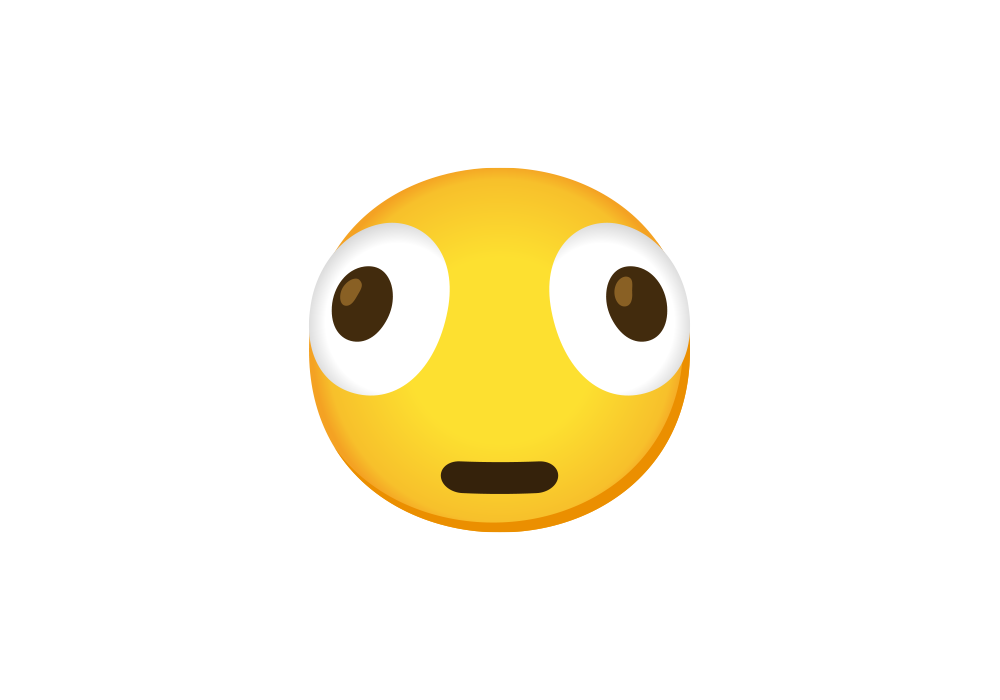
This week, emoji are slowly rolling into our keyboards and the first sighting of Bigfoot is in the Android 17 update. Alongside our favorite hairy creature is a Distorted Face emoji . If you’ve been double tapping 😳😳 in the Emoji Kitchen, you’ve likely met this latest recruit to the Unicode Standard, but even if you haven’t it’s a face that will feel familiar.
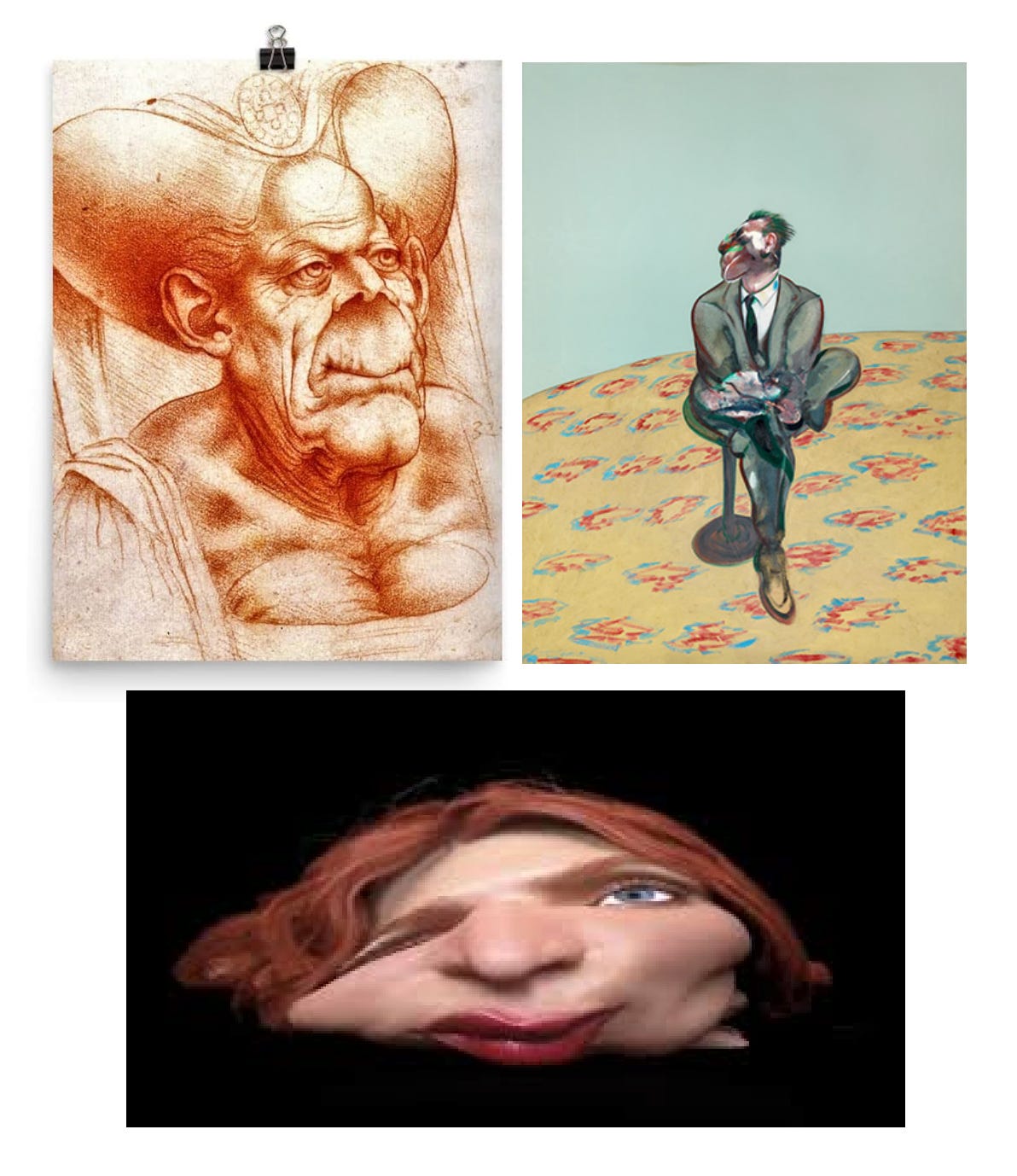
The Art of Distortion: From Da Vinci to SOPHIE
You might think of the Distorted Face as a modern invention but we’ve been manipulating our faces with this kind of tension for centuries. From Da Vinci’s 15th-century grotesques to Francis Bacon (“If you want to convey fact and if you have to do it, then this can only ever be done through a form of distortion”1) this technique is used to express a great deal of feeling beyond what the muscles in our faces are literally able to flex.
In the 1930s, animators turned this into a science with 'squash and stretch,' proving that for a character to feel real, they sometimes have to look impossible. When I originally drew this expression for Emoji Kitchen, I was building on this foundation. I wanted to show how faces are not merely defined by facial features but are also a material. Fast forward to the hyper-pop era, and the fabulous producer SOPHIE (RIP) 💿 revolutionized the visual of “plasticity.” In her Faceshopping music video, her own face is rendered as a hyper-realistic 3D model being stretched, hashed, and inflated.
Chronically Online: Why We Warp
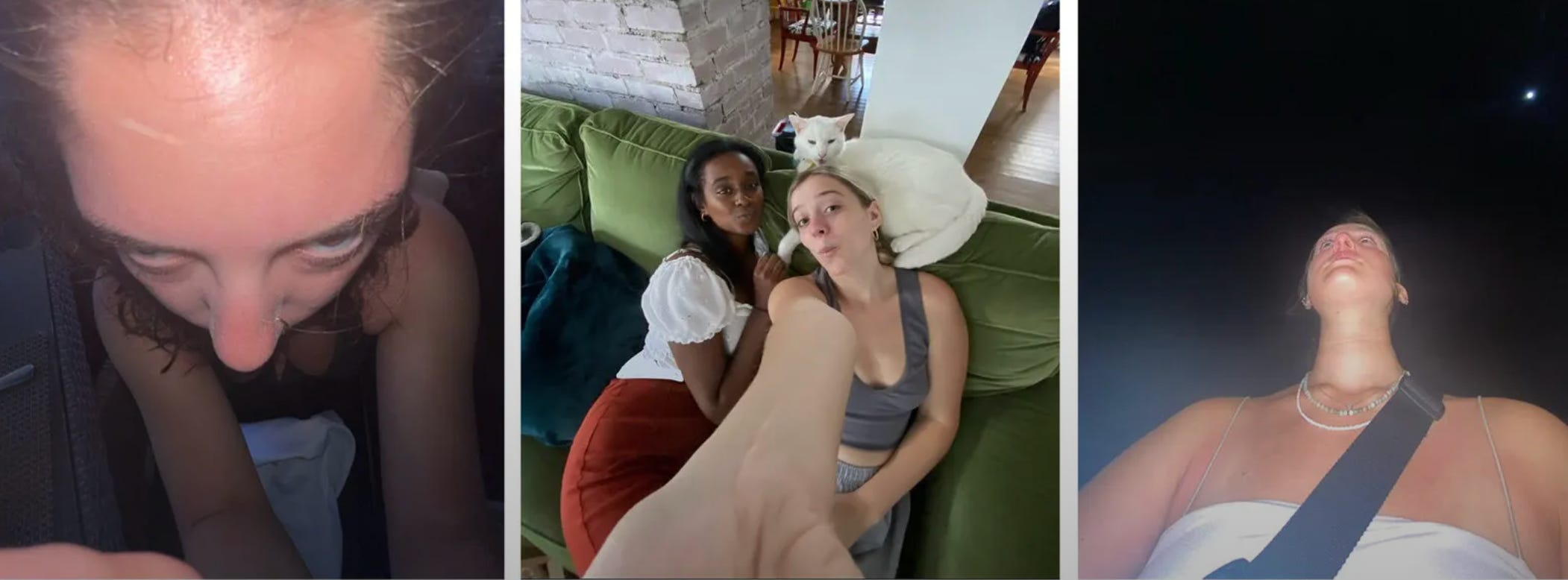
Today, distortion isn’t just a mistake anymore, it’s become an emotional shorthand. Sometimes it’s even a high-status commentary on our relationship with screens, filters, and the "plasticity" of modern identity. Take the Fisheye PFP: if you’ve been on Discord or TikTok lately, you’ve seen the look—holding the phone inches from the face to create a bulbous, distorted nose 🤳. This “ugly-cute” distortion is a signal of authenticity, a deliberate rebellion against the airbrushed, hyper-perfect “Facetune” era.
But more importantly, distortion is a form of control. In an era of AI and beauty filters choosing to be "distorted" is a way to feel like you really own your own image and explore not just how you look but how you feel. While some swap “selfie-hacks” to circumvent lens distortion others simultaneously are setting their cameras to accentuate it. When I make myself look intentionally ‘off’, I can’t be judged for failing to look perfect because I’m deliberately dramatizing reality.
Note to self: My apartment craves a Convex Security Mirror.
Breaking the Reality Barrier
First came Melting Face 🫠, our collective surrender to the liquid state.
Then Dotted Line Face 🫥, the visual representation of sublimation: turning from a solid into a gas just to escape a conversation.
Now, we have Distorted Face (U+1FAEA), a moment defined by tension: where you aren’t just feeling an emotion — you are being physically altered by it.
Illustration is a gift because it affords us the ability to push beyond the physical world. Distorted Face emoji is the face of a silent, internal scream while scrolling this week’s headlines, or the psychic bloat of being crushed under the weight of AI. It captures the unearned confidence of being full of hot air, but also the precarious vulnerability of a single "rando" comment ruining your day. Whether it’s the memeification of a VP’s cheeks or the 0.5x selfie used to dodge the pressure of being ‘hot,’ we are all constantly inflating and deflating our digital selves. Distorted Face is the tiny reminder that sometimes, the only way to express how we feel is to stretch the truth until it’s unrecognizable.
https://www.google.com/books/edition/Francis_Bacon_A_Self_Portrait_in_Words/tVcdEQAAQBAJ?hl=en&gbpv=1&dq=%22If+you+want+to+convey+fact,+this+can+only+ever+be+done+through+a+form+of+distortion.&pg=PT557&printsec=frontcover